Tokenization Explained: Turning Real Assets Into Tokens
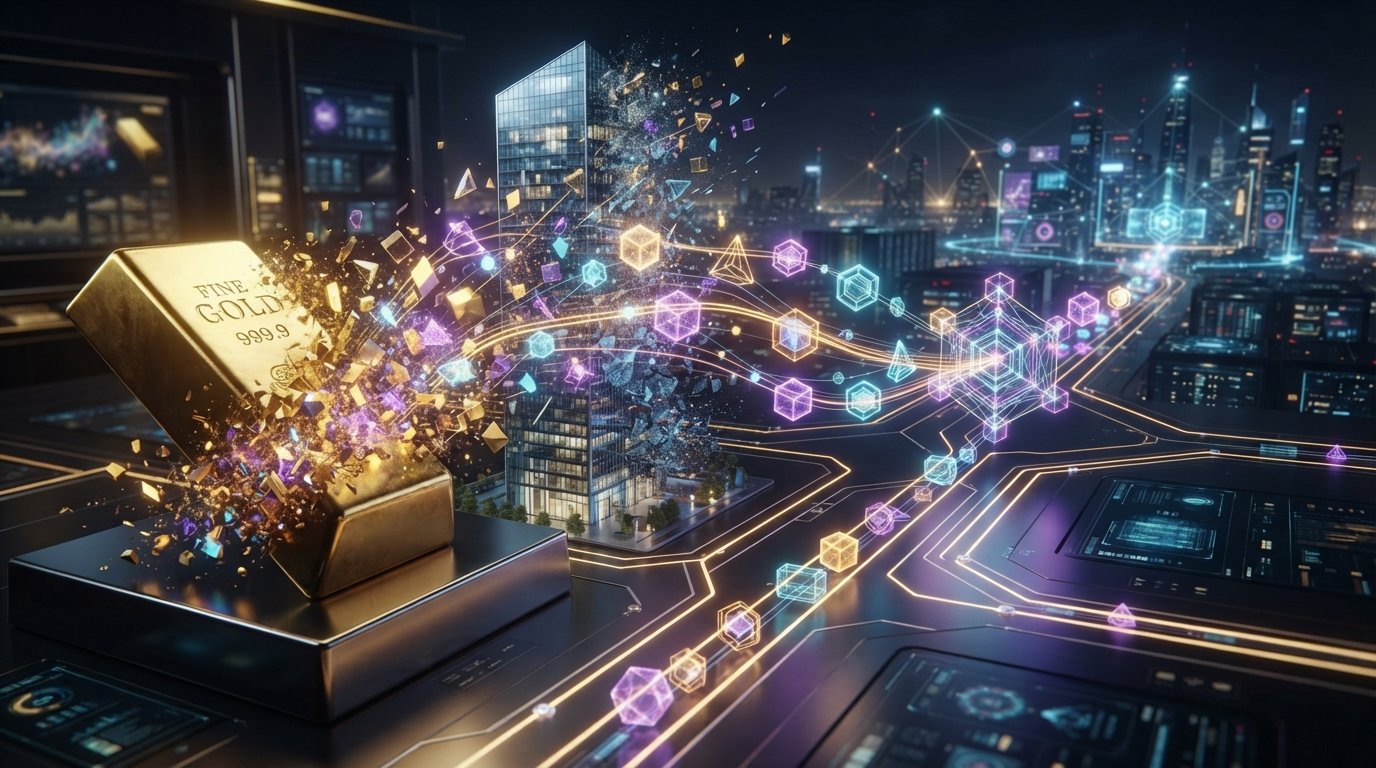
Tokenization is the process of converting rights to a real-world asset — real estate, bonds, gold, art, or company equity — into digital tokens on a blockchain. Each token represents a share of ownership, so a $10 million building can be split into millions of tradable tokens. Tokenization makes assets easier to buy, sell, and divide; it enables 24/7 trading, near-instant settlement, and programmatic rules. It is currently the fastest-growing institutional use of blockchain, with trillions of dollars projected to move onto tokenized rails over the next decade.
For a decade, the loudest arguments about blockchain were about speculation and digital money. Meanwhile, quietly, the technology found the job it was actually built for: turning hard, illiquid, expensive assets into liquid, divisible, transferable digital tokens. This is tokenization, and it is now the most consequential trend in the entire digital asset universe — a trend backed by the world’s largest banks, asset managers, and exchanges.
This guide explains tokenization from the ground up: what it actually means, how the mechanics work, why institutions are pouring billions into it, what can realistically be tokenized (and what cannot), the risks that are rarely advertised, and where the market is heading. It is written for investors, curious professionals, and anyone who wants to understand the technology that is quietly rewriting the meaning of ownership.
What Is Tokenization?
Tokenization is the conversion of ownership rights in a real or financial asset into a digital token recorded on a blockchain. The token becomes the digital representation of a share of that asset, and holding the token — verified through a public ledger and controlled by your cryptographic keys — is the mechanism by which you hold the underlying value.
A concrete example makes it obvious. A commercial building worth $20 million is, for ordinary people, out of reach — you need millions just to enter, and selling takes months and lawyers. Now suppose the building is tokenized into 20 million tokens, each worth $1. A student can buy $500 of real-estate exposure. A fund can trade a fraction of its position in seconds. The building did not change; the access to it changed completely.
Three words capture what tokenization changes about assets:
- Liquidity: Assets that previously took weeks or months to sell — real estate, private equity, fine art — can trade in minutes, because the token is a standardized unit on a global market.
- Access: Minimums collapse. Large-ticket assets become purchasable in small denominations, opening institutional asset classes to retail investors.
- Programmability: Ownership rules, dividend payments, and transfer restrictions can be written into the token itself and executed automatically.
Tokenization is frequently confused with a related but distinct idea: stablecoins are tokenized cash; CBDCs are tokenized central-bank money. They are all the same foundational technology applied to different assets — which is exactly why the infrastructure being built for money is rapidly being reused for property, bonds, and commodities.
How Tokenization Works
Tokenizing an asset is not simply photographing it and uploading it. It is a careful legal and technical process that runs roughly like this:
- Establish legal ownership of the asset. A legal entity (often a special purpose vehicle, or SPV) acquires and holds the physical or financial asset so the ownership is clean, documented, and enforceable in court.
- Draft the legal rights. Lawyers write the contract that defines what each token represents — a share of income, a share of value, a claim on the underlying. This legal wrapper is what makes the token enforceable, not just decorative.
- Create the token. A smart contract issues a fixed number of tokens on a blockchain. Security-token standards (such as ERC-3643 on Ethereum) add compliance rules — who may hold, whether transfers require approval — directly into the token.
- Hold the asset in custody. Physical assets need a custodian (a vault for gold, a title company for property) that the token can legally point to. This custodian is the bridge between the digital token and the physical reality.
- Trade and settle. Tokens trade on compliant marketplaces; transfers settle on-chain in minutes, with the ledger automatically recording who owns what — no back-office reconciliation, no settlement delay.
Notice where the risk concentrates: the token can be perfectly engineered, but if the legal structure behind it is weak — the asset is unverifiable, the custodian is unreliable, the governing jurisdiction is hostile — the token is only as sound as that underlying paperwork. Tokenization digitizes trust; it does not create it.
Why Tokenize: The Benefits
The benefits explain why the world’s largest financial institutions are spending billions on tokenization infrastructure:
- Fractional ownership. High-value assets become accessible in small slices. Real estate, fine art, and private equity — previously the playground of the wealthy — open to everyday investors.
- Improved liquidity. Secondary markets for tokenized assets run 24/7, settle in minutes, and reach buyers globally. An owner can exit a position at any hour instead of waiting for a match in a 9-to-5 market.
- Lower costs and faster settlement. Tokenization removes brokers, clearinghouses, and manual reconciliation. Trades settle on-chain in minutes versus the traditional T+2 days, reducing counterparty and settlement risk.
- Transparency. The token’s issuance, transfer history, and ownership are recorded publicly on the ledger. Investors can verify claims about an asset instead of trusting a prospectus.
- Programmability. Dividends can pay out automatically, rental income can be distributed by smart contract, and transfer restrictions (e.g., “only accredited investors”) can be enforced by the token itself.
- Global reach. A Japanese investor can buy a slice of a London commercial building or a US treasury token without currency, brokerage, or time-zone friction.
- Efficiency for issuers. For banks and funds, tokenization compresses issuance, record-keeping, and servicing into one automated system — a structural cost saving that compounds over time.
The institutional enthusiasm is not ideological; it is arithmetic. When an asset class — bonds, funds, real estate — can be issued, settled, and serviced on one programmable ledger, the marginal cost of each transaction falls dramatically, and the addressable market expands to the entire connected world.
What Can Be Tokenized
In principle, almost anything with value. In practice, the market has concentrated on a few categories that combine real demand with feasible legal structures:
Real estate
Commercial buildings, residential portfolios, and land are the poster child for tokenization. Platforms tokenize buildings into income-bearing tokens; investors receive rental yield and benefit from price appreciation in proportion to their holding, while enjoying exit liquidity real estate never had.
Treasuries and bonds
Tokenized US Treasury products have grown explosively — some reach multi-billion-dollar scale within a year. Investors park cash in tokenized T-bills that pay yield 24/7 and can be redeemed instantly, a direct competitor to bank savings rates. This is the fastest-growing corner of the market today.
Commodities
Gold has been tokenized for years — PAX Gold represents one troy ounce of physical gold per token. Tokenized oil, silver, and carbon credits are emerging, each bundling the stability of the commodity with the speed of crypto.
Art and collectibles
Ownership stakes in paintings, rare cars, and watches can be split among collectors. Buyers gain exposure to blue-chip art without seven-figure minimums, and the token’s provenance trail discourages forgery.
Private equity and venture funds
Startup equity and fund interests, historically locked up for years, are being tokenized to give investors liquidity windows and to simplify cap tables for founders.
Infrastructure and energy
Solar plants, data centers, and renewable projects raise capital by selling tokenized income streams to investors who can monitor performance on-chain in real time.
The pattern across every category: the best candidates are assets with stable underlying value, a clear legal wrapper, and a liquidity problem. Assets that are already liquid and centrally cleared gain less from tokenization than assets trapped in illiquidity.
Tokenized vs Traditional Assets
| Factor | Traditional structure | Tokenized structure |
|---|---|---|
| Minimum investment | High (whole property, bond lot, share block) | Low (fractional tokens) |
| Transfer speed | Days to months, intermediaries required | Minutes, direct token transfer |
| Trading hours | Market hours, business days | 24/7, global |
| Record-keeping | Registrars, custodians, reconciliation | Public ledger, automatic |
| Legal enforcement | Established courts and regulation | Depends on the wrapper and jurisdiction |
| Transparency | Limited, periodic disclosure | Continuous, on-chain |
The comparison is directional, not absolute; real products mix both worlds. The final two rows matter most to skeptics — legal maturity is the industry’s biggest open question.
The Real Risks and Challenges
Tokenization is promising, but the industry’s own promotional material tends to skip the parts that can hurt you:
- Legal and regulatory uncertainty. The token is only as enforceable as the law of the jurisdiction holding the asset. A tokenized building in a country with unclear digital-asset law may have no clear recourse if things go wrong. Securities regulation also varies — a token that is a “security” in one country may be unregulated in another.
- Custody of the physical asset. For tokenized gold or real estate, someone must physically hold the asset and be trustworthy. If the custodian fails, the token’s “backing” becomes a legal claim, not a vault.
- Liquidity illusion. A token can trade, but if few people buy, your “liquid” asset cannot be sold at a reasonable price. Most tokenized real estate and art still have thin secondary markets. Tradability is not the same as liquidity.
- Valuation problems. Property and art are not continuously marked-to-market. Without reliable pricing, token holders may be trading on guesses rather than fair value — and small, illiquid markets are vulnerable to manipulation.
- Technology and smart-contract risk. Bugs in token contracts, key management failures, or a chain that goes down can delay or lose funds. This risk is manageable but real, and it is invisible in most marketing.
- Settlement finality and reversals. On-chain trades are permanent. A mistaken or fraudulent transfer of a tokenized asset is far harder to unwind than a traditional brokerage error.
- Interoperability. Tokens on different chains and platforms do not always move cleanly between markets, fragmenting liquidity and complicating custody for holders.
The due-diligence rule: before buying a tokenized asset, verify the legal wrapper (who holds the asset?), the custodian (where is it stored, and who audits it?), the jurisdiction (what law governs my claim?), and the actual trading volume (can I actually sell?). If a project cannot answer all four, walk away.
How to Invest in Tokenized Assets
If you want to put these ideas into practice, here is the realistic, safe entry path in 2026:
- Start with the liquid, regulated products. Tokenized treasury funds and money-market products from established issuers are the most mature category — they run on real liquidity, are issued by regulated firms, and behave like a high-yield savings account with instant redemption. For a beginner, this is the lowest-risk way to experience tokenized assets.
- Understand what you hold. Read the product documentation. Is the issuer licensed? Where are the assets held? Is the token redeemable directly from the issuer, or must you find a buyer on a marketplace? Redemption terms matter more than marketing yield.
- Use a compliant platform. Buy through platforms that perform investor verification and only offer products approved in your jurisdiction. Unregulated “decentralized” real-estate tokens with no legal wrapper are usually the riskiest option, not the most innovative.
- Check the secondary market before buying. Look at real trade volume and spreads, not just the headline price. If the order book is empty, your “liquid” token is effectively frozen — plan accordingly.
- Mind fees and taxes. Tokenized products can carry issuance, management, custody, and trading fees that quietly compound. And the tax treatment of tokenized real estate and securities varies by country — treat every trade as a taxable event until you confirm otherwise.
- Diversify and size sensibly. The sector is young. A reasonable allocation treats tokenized assets as part of an overall portfolio — a small but real slice — rather than a full bet on a promising narrative.
The mental model to keep: tokenization changes the plumbing of an asset, not its fundamentals. A tokenized building is still a building — it can sit empty, its market can be thin, and its custodian can fail. What the token adds is access, speed, and transparency. The due diligence on the asset itself remains exactly as important as it was before the token existed.
The Institutional Boom
What was once a niche startup pitch is now mainstream balance-sheet strategy. The direction of travel is unambiguous:
- Banks and asset managers: Several of the world’s largest asset managers have launched or piloted tokenized funds; major banks operate private tokenization platforms for clients, and global exchanges run digital-asset settlement rails.
- Tokenized money leads the way: Stablecoins proved that tokenized cash works at scale, which gave institutions confidence to tokenize the assets that sit next to cash in portfolios — bonds, money-market funds, and treasuries.
- Central banks: Wholesale CBDC pilots — digital money for interbank settlement — are being built on the same infrastructure that powers tokenized bond markets, pointing toward a tokenized core of the financial system.
- Cross-industry consortia: Bank and fintech alliances are standardizing token issuance, custody, and transfer so assets can move across institutions instead of being locked in one platform.
The numbers people cite for this market’s eventual size — hundreds of trillions in tokenized assets — are projections, not facts. But the direction is consistent across every serious analysis: financial assets are moving onto programmable rails, and the question is speed, not whether.
The Future of Tokenization
The next few years will likely bring:
- Compliance by design: Tokens will increasingly enforce who can hold and trade them through code, aligning on-chain behavior with securities law automatically.
- Interoperable markets: Standards that let one token trade across exchanges, custodians, and chains will consolidate fragmented liquidity into genuinely deep markets.
- Blended products: Tokenized real estate with automated rent distribution, tokenized funds with daily on-chain valuations, and treasury products embedded directly into wallets and payment apps.
- Mainstream access: As regulation matures and user interfaces improve, fractional ownership of real assets will look less like crypto and more like a normal investing app — which is precisely when adoption compounds.
- Continued hype-washing: Alongside the genuine builders, a stream of low-quality “tokenized everything” projects will appear. The diligence discipline described above will separate real value from packaging.
For the average investor, the near-term takeaway is practical: tokenized treasury products and funds are already usable and competitive, while tokenized real estate and art remain higher-risk, less-liquid experiments. The infrastructure is moving faster than the legal framework — the next decade will be about closing that gap.
Frequently Asked Questions
Is tokenization legal?
Yes, when done properly — but legality depends on jurisdiction and structure. Security tokens must comply with securities laws where they are offered, and the legal wrapper behind the asset must be enforceable. Tokenizing an asset does not bypass regulation; it lives inside it, and the rules are still being written in many countries.
What is the difference between tokenization and NFTs?
Tokenization issues fungible tokens that each represent an equal share of an asset (one token = one equal unit). NFTs are unique, non-divisible certificates for specific items. A tokenized building uses fungible tokens; a certificate for a one-of-a-kind painting could be an NFT. The underlying blockchain tech is the same; the token design differs.
Can I actually buy real estate with a few hundred dollars through tokenization?
In products designed for it, yes — platforms sell fractional tokens of commercial properties, and some tokenized REITs and funds have very low minimums. In practice, check that the product is legally sound, the secondary market is real, and the fee structure does not eat your returns. Low minimums are real; so is the need for diligence.
What assets are the best candidates for tokenization?
The strongest candidates are assets with clear legal ownership, stable underlying value, and a liquidity problem — real estate, private equity, bonds, treasuries, commodities like gold, and infrastructure projects. Already-liquid centrally-cleared assets gain the least because they have less friction to remove.
Is tokenized gold the same as owning gold?
It is a claim on physical gold held by a custodian — economically similar, but not identical. You carry the custodian and audit risk, and redemption in physical form may involve fees and logistics. Most investors treat tokenized gold as gold exposure with crypto convenience rather than as a personal vault.
Will tokenization make traditional stocks and banks obsolete?
Unlikely in the near term. Banks and exchanges are adopting tokenization as an upgrade to their own infrastructure, not as a replacement of themselves. The realistic outcome is a hybrid system where tokenized rails handle issuance, settlement, and servicing while traditional institutions provide custody, compliance, and trust — at least until the legal framework matures.
Conclusion
Tokenization is the quiet revolution inside the louder crypto story: the application of blockchain to the assets that already hold the world’s wealth. By converting property, bonds, commodities, and equity into divisible, tradeable, programmable tokens, it attacks the oldest inefficiencies in finance — illiquidity, high minimums, slow settlement, and opaque record-keeping.
The opportunity is enormous and the caveats are equally real. Legal wrappers, custody, liquidity depth, and regulation are all works in progress. The right posture is informed optimism: understand the mechanics, verify the legal structure, favor products with deep real markets, and treat the sector’s early promises with healthy skepticism. Tokenization may not happen all at once — but it is already happening, asset class by asset class, at the world’s largest financial institutions. It pays to learn the map now.