NFTs Explained: How Digital Ownership Works in Web3 Today
An NFT (non-fungible token) is a unique digital certificate of ownership stored on a blockchain. Unlike cryptocurrencies such as Bitcoin — where every unit is identical — each NFT is one-of-a-kind, which makes it perfect for proving you own a specific digital item: art, music, collectibles, in-game assets, tickets, or membership passes. NFTs give digital things the three properties they historically lacked: provable scarcity, authentic ownership, and the ability to trade them like property. They are a core building block of Web3.
Few technologies have generated more hype, confusion, and genuine substance in equal measure than the NFT. At its peak, digital artworks sold for tens of millions of dollars; at its trough, the same marketplace was mocked for holding pixelated images of apes. Both reactions miss the point. NFTs are neither a get-rich scheme nor a fad — they are a genuine innovation in how digital ownership works, and they are already embedded in gaming, ticketing, fashion, and finance under names most people never notice.
This guide strips away the hype and explains NFTs properly: what they are at the technical level, what buying one actually gives you, the real use cases that survive the hype cycle, how to participate safely, and the risks that have cost careless users real money. By the end you will understand why companies from Nike to Ticketmaster to major sports leagues are quietly building on NFT infrastructure.
What Is an NFT?
NFT stands for non-fungible token. Let us untangle those words:
- Fungible means interchangeable — a $10 bill is equal to any other $10 bill, and one Bitcoin is always worth one Bitcoin. Fungible assets can be divided and exchanged without loss of value.
- Non-fungible means unique — no two are identical. A signed first-edition book, a house, or a specific digital artwork cannot be swapped one-for-one with something else.
- Token means a unit of value recorded on a blockchain, which gives it a tamper-proof, public record of who owns it and its entire history.
Put together: an NFT is a unique, indivisible digital token that proves ownership of a specific item — often a digital file, but increasingly a real-world object, an access right, or a membership. The token itself lives on the blockchain; the file it points to usually lives elsewhere (a web server, a decentralized storage system like IPFS).
The key insight that makes NFTs meaningful: before NFTs, digital files could be copied infinitely for free, so they had no real scarcity and no real ownership. You could “own” a song or a screenshot in the sense of having it on your device, but so did everyone else, and nobody could prove they were the original owner. NFTs attach a permanent, verifiable proof of authenticity and ownership to a digital item — scarcity, by design.
Think of an NFT as a digital certificate of authenticity that also functions as a deed. The artwork can be copied freely online, but only one person can hold the deed that says “you own the original.”
How NFTs Actually Work
NFTs are built on the same technology as cryptocurrencies — blockchains and smart contracts — but with a crucial twist in how tokens are defined:
- Token standards: On Ethereum, the most common NFT standard is ERC-721, which defines each token as unique with its own ID. A newer standard, ERC-1155, allows both unique and shared tokens in one contract — useful for games that have one-of-a-kind items alongside mass-produced consumables.
- Metadata: Each NFT carries metadata — a name, description, and a link to the actual image, video, or other content. This metadata is what makes the token meaningful to humans.
- Smart contracts: The rules of the NFT — who can mint, what royalties apply on resale, whether it can be transferred — are written into code that runs automatically. Royalties are the hidden gem: many NFT standards let the original creator automatically earn a percentage every time the NFT is resold, forever.
- The ledger: Every mint, sale, and transfer is recorded permanently and publicly. Anyone can verify an NFT’s full history — who created it, who has owned it, what it has sold for.
Minting is the process of turning a file into an NFT — publishing the token to the blockchain. Once minted, the NFT cannot be duplicated, altered, or destroyed by anyone (including the creator), unless the contract itself was written to allow it. That permanence is both the feature and, for careless buyers, the trap.
The Short, Turbulent History of NFTs
NFTs did not appear overnight in a bored-ape jpeg. Their lineage runs back more than a decade:
- 2009–2012 — the idea stage: Early crypto experiments such as “colored coins” played with attaching meaning to small amounts of Bitcoin, foreshadowing the idea that a token could represent a specific asset.
- 2015–2017 — the first real NFTs: Rare Pepe digital trading cards (2016) and CryptoPunks (2017) established the collectible template. Then CryptoKitties (2017) congested Ethereum with virtual cats, proving both demand and the limits of the network.
- 2018–2020 — the ERC-721 standard and adoption: Ethereum’s official NFT standard brought structure, and the first utility experiments — gaming items, virtual worlds, ticketing — began quietly attracting builders.
- 2021–2022 — the bubble: A speculative mania drove individual artworks to tens of millions of dollars, minted millions of collections, and ended with a brutal drawdown. This era produced both the format’s fame and its worst reputational damage.
- 2022 onward — the infrastructure era: As speculation cooled, brands, sports leagues, ticket platforms, gaming companies, and credentialing systems adopted NFT technology for real products. Social trading volumes collapsed, but the builders kept building on a far quieter base.
Reading that timeline is like reading the biography of a technology that simply refused to disappear. The hype cycle taught the industry painful lessons about speculation — and the current era is what happens when the speculation drains away and the engineering remains.
What You Really Own When You Buy an NFT
This is the single most misunderstood point about NFTs, and it is where honest expectations separate smart collectors from disappointed buyers:
- You always own the token. You own the blockchain record — the unique digital certificate — outright. That record is yours, provable to anyone, forever.
- You may or may not own the underlying content. Unless the sale explicitly transfers copyright or usage rights, the creator keeps the intellectual property. Many art NFTs license display rights only — you can hang it in your virtual gallery, but you cannot print and sell posters of it.
- Ownership is about the metadata, not the file itself. The image is usually still publicly viewable and copiable. What you own is the authentic original — the deed to the piece, not the pixels.
- Smart-contract terms decide everything. Some NFTs grant full commercial rights; some grant nothing beyond custody. Read the contract or the collection’s terms before buying, exactly as you would read a real-estate deed before signing.
A useful way to think about it: buying an NFT is closer to buying the title to a house than to buying the house itself. Both the title and the house matter, but they are different things. When a collection’s hype collapses, what many disappointed buyers lost was their faith that the token’s price would hold — not the token itself.
This matters for value too. An NFT’s worth is not intrinsic; it derives from the collection’s community, the artist’s reputation, the utility attached, and the market’s mood. Unlike a bond or a share, there is no cash flow behind most NFTs — their value is, bluntly, whatever someone else will pay.
How NFTs Are Used Today
Beyond the headline stories, NFTs have settled into several categories with genuinely different risk and utility profiles:
1. Digital art and collectibles
The original use case. Artists mint their work, collectors buy and trade the certificates. Projects like CryptoPunks and Bored Ape Yacht Club defined the format. For creators, royalties on resale are a structural improvement over the gallery system, where an artist typically earns nothing when their work appreciates.
2. Gaming and virtual worlds
In-game items — skins, weapons, land, characters — become tradable assets players genuinely own. Games like Axie Infinity and the virtual land of Decentraland and The Sandbox pioneered “play-to-earn” economics. Own an in-game sword as an NFT, and you can sell it on a marketplace when you are done with it — something traditional games never allowed.
3. Event tickets and memberships
Ticketmaster-style NFT tickets combat scalping and forgery, and they can pay the organizer royalties on secondary resales. NFT “membership passes” gate access to communities, Discord servers, and exclusive content — a practical utility used by clubs, conferences, and newsletters.
4. Identity and credentials
Degrees, certificates, and licenses can be issued as NFTs — verifiable at a glance, immune to forgery, and portable across platforms and borders. This is one of the most quietly promising uses.
5. Real-world asset claims
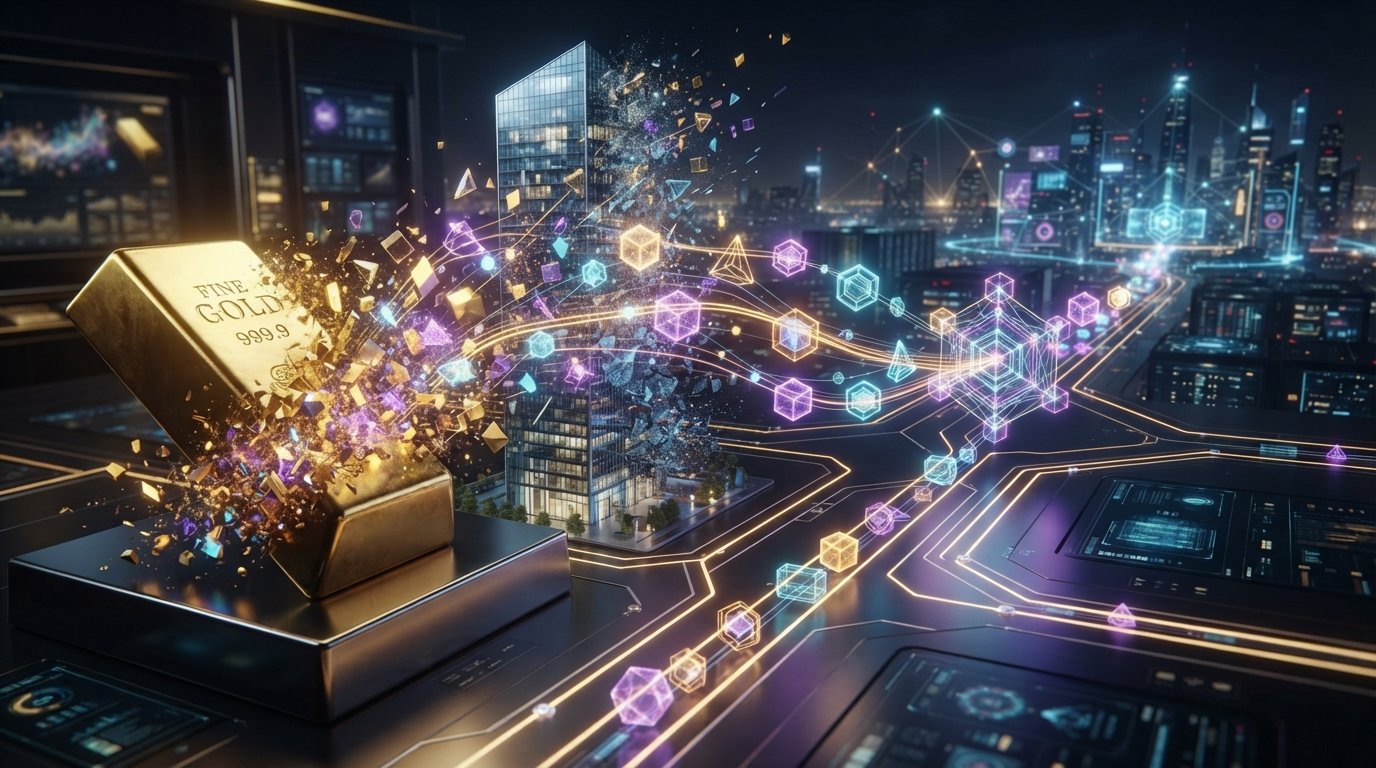
NFTs can represent physical items — a rare watch, a deed, a commodity — linking a verifiable digital token to a physical object. For the wider trend of putting real assets on-chain, see our tokenization guide.
6. Brand loyalty and fashion
Major brands issue digital wearables and loyalty collectibles that customers can own and trade. Nike’s Web3 shoes, Starbucks’s NFT rewards, and luxury houses selling virtual versions of physical products all run on NFT rails.
Marketplaces and How to Buy
If you decide to participate, the practical path is straightforward:
- Get a wallet and some crypto. You will need a wallet connected to a major network (Ethereum, Polygon, Solana, Base) and enough crypto for the purchase plus network fees. Ethereum gas fees can be steep during congestion; cheaper layer-2 and alt chains are friendlier for beginners. Our wallet guide covers the essentials.
- Use a reputable marketplace. OpenSea, Blur, and Magic Eden dominate. Create an account by connecting your wallet, then browse collections by category and verified status.
- Verify the collection. Countless fake collections impersonate famous brands. Check the official verification badge, the creator’s verified social accounts, and the collection’s contract address against the creator’s published address. A “collection” that is an exact copy of a famous one, sold cheaper, is almost always a scam.
- Check the royalties and fees. Confirm the royalty percentage, marketplace fees, and any creator terms before confirming.
- Buy, transfer, and record. Transactions are final. Save your transaction hash and the exact contract address for your records and taxes. In many countries NFT sales are taxable events.
The golden safety rules: buy from the collection’s official contract address only, never share your seed phrase with “support,” never click unexpected links or wallet “approve” prompts you do not understand, and assume anything that requires you to sign a blind transaction is an attack.
Storage deserves its own paragraph because it quietly decides whether your NFT survives the year. If a project stores its images on a centralized site, the artwork can vanish when hosting is discontinued — and the certificate suddenly points at nothing. Prefer projects that store metadata on decentralized systems such as IPFS or Arweave, and keep the most valuable items in a cold wallet rather than a marketplace hot account. And always back up the same way you would any crypto: seed phrase on paper, offline, in multiple places. Our wallet safety guide runs through the whole procedure.
Finally, treat every NFT purchase as a small research project. Who created it? What is their track record and public identity? Is the profile verified by the marketplace and cross-checkable on independent social accounts? What exactly does the token grant — art, rights, utility, access? How liquid is the market? Answering those five questions before spending takes five minutes and filters out the overwhelming majority of losses.
The Real Risks and Scams
NFTs attracted both real experimentation and an army of extractors. These are the risks that cost people money, in rough order of frequency:
- Rug pulls: A project builds hype, sells out a mint, then the team abandons the project — or disappears with the funds. Thousands of collections did exactly this. If you cannot identify the real team behind a project, assume it is a rug.
- Fake collections and phishing: Counterfeit NFTs and wallet-draining phishing sites are everywhere. One bad “approve” signature can empty your entire wallet — not just the NFT.
- Wash trading and fake volume: Sellers trade an NFT back and forth with themselves to inflate apparent demand and lure buyers. High historical sales volume is not evidence of genuine interest.
- Extreme price volatility and illiquidity: Most NFTs trade rarely and can become unsellable at any price. The “blue-chip” narrative of guaranteed appreciation has been repeatedly disproven by 90%+ drawdowns.
- Metadata fragility: If the file is stored on a plain web server, it can disappear when the site dies. Decentralized storage (IPFS, Arweave) is more durable, but not guaranteed.
- Environmental concerns (largely historical): Early Ethereum NFTs consumed significant energy under proof-of-work. Ethereum’s migration to proof-of-stake in 2022 cut its energy use by more than 99%, and most NFT networks were always low-emission. It is no longer the issue it once was.
- Regulatory uncertainty: Regulators are debating whether some NFTs are securities. Rules are still forming, particularly around investment-like projects.
The blunt truth: the overwhelming majority of NFT projects fail financially. Treat NFT spending as buying art and community — not as an investment with a guaranteed return. Only spend what you can afford to lose entirely.
The Future of NFTs in Web3
After the hype bubble deflated, the underlying infrastructure did not go away — it went to work. The realistic future of NFTs is less about speculative pictures and more about infrastructure and utility:
- Off-chain utility wins: Ticketing, loyalty programs, credentials, gaming items, and brand memberships — verifiable digital rights — will increasingly use NFT rails because the technology genuinely fits.
- Tokenized real-world assets: The most funded frontier of the token economy is not pixel art but property, bonds, and collectibles. Our tokenization deep dive explains where the money is actually flowing.
- Soulbound and identity tokens: Non-transferable “soulbound” tokens that represent degrees, licenses, and reputation are reducing the self-custody risk and enabling recognition — a big step for credentialing.
- Interoperability: Standards for moving NFTs between games, metaverses, and platforms are maturing, so a digital item you own may become portable rather than trapped in one walled garden.
- AI provenance: As AI generates convincing images, video, and audio, verifiable proof of origin — “this was created by a human and certified by X” — is becoming genuinely valuable. NFTs are the natural certificate for that.
The pattern across all of these: the value shifts from “I own a meme picture” to “I hold a verifiable right or asset with real purpose.” That is a much more sustainable foundation, and it is already being built.
Frequently Asked Questions
Can I download a copy of an NFT image and own it for free?
You can copy the image pixels, but you do not own it as a certified original. An NFT is the ownership record on the blockchain — copying the file does not transfer the token. It is the difference between printing a photo of a painting and holding the authenticated original.
What is the difference between a fungible token and an NFT?
Fungible tokens are interchangeable and divisible (all Bitcoins are equal), so they work as money. NFTs are unique and indivisible (each one is different), so they work as certificates of ownership for specific items. Fungibility is about interchangeability, not about worth.
Do I need an NFT to get into Web3?
No. You can use wallets, trade cryptocurrencies, use DeFi, and store assets without ever touching an NFT. NFTs are one tool in the Web3 toolbox, useful for ownership, access, and credentials — not a mandatory gate.
Are NFTs a good investment?
Most are not investments in the financial sense — they produce no income and most lose value after launch hype. A very small number of blue-chip collections have appreciated, but that is closer to collecting art than to investing. Only spend money on NFTs you can afford to lose entirely, and buy for creativity, community, or utility first.
How do NFT royalties work?
Many NFT smart contracts give the creator an automatic percentage of every secondary sale — for example, 5% of each resale flowing to the artist’s wallet. Because the rule is coded into the contract, it executes automatically without an intermediary. Some marketplaces allow buyers or creators to lower or waive these fees, so check the listing terms.
What happens if the NFT marketplace I used shuts down?
Your NFT remains yours because the token lives on the blockchain, not inside the marketplace. If you hold the token in your own wallet, you can list and trade it on any marketplace that supports the same standard. This durability is a core benefit of on-chain ownership. If you keep NFTs stuck inside an exchange, however, you carry its custodian risk.
Conclusion
NFTs solved a genuinely hard problem — proving ownership and authenticity for digital things — and the solution has stuck long after the punchline jokes faded. The speculative picture era was a hype bubble, but the plumbing underneath is being adopted by games, brands, ticketing, credentialing, and real-world asset markets.
If you take one thing away, make it this: NFTs are certificates of ownership, not tickets to wealth. Engage with them for reasons you can articulate — supporting artists, owning in-game items, holding a membership — and treat them as you would any collectible: buy what you love, verify everything, protect your keys, and never invest money you cannot afford to lose. Understood that way, NFTs stop being a punchline and start being the foundation of how digital ownership works in Web3.